

Welcome to the first post in my new series! Every couple of weeks, I’ll look at something that spread online, walk through what actually happened, and end with the question I find most interesting: why would people believe that?
What spread
Last week, Ukrainian drones struck three data centers in Russia owned by Yandex, a major Russian tech company. Soon after, a story took off on social media: the strikes had knocked out Russian propaganda bots. People said their replies were suddenly calmer with fewer trolls, fewer hostile accounts, a nicer overall internet. The story was shared by big accounts and even Ukrainian President Volodymyr Zelensky, who said social media felt easier to breathe after the strikes.
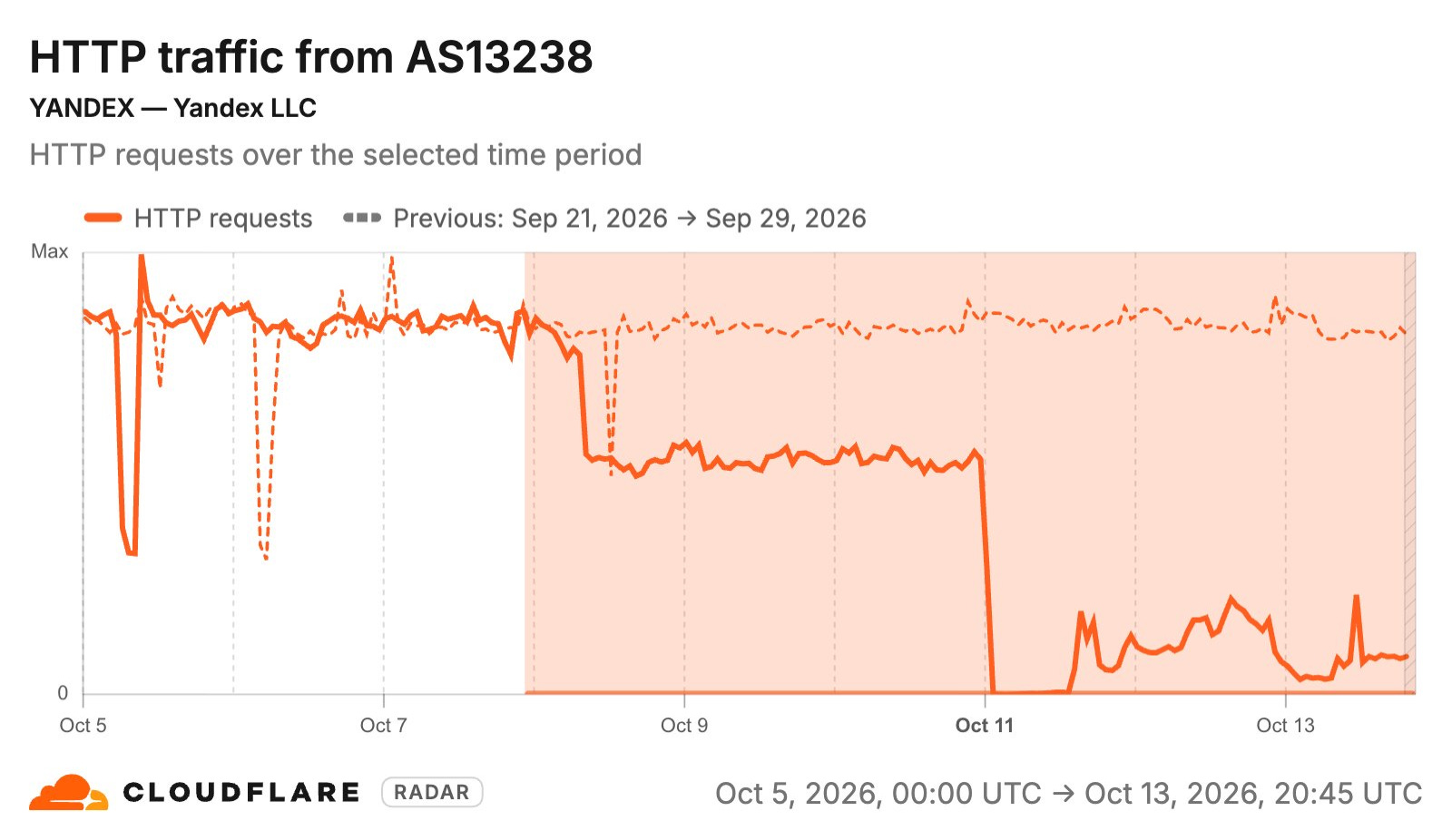
There was also a striking chart behind it. Cloudflare, which handles traffic for millions of websites, showed automated traffic from Yandex’s network dropping to almost zero.
What the evidence actually shows
First off, one big problem is the word “bot.” As Renée DiResta explains in a great breakdown at Lawfare, the bots in that Cloudflare chart are mostly web crawlers. These are automated programs that visit websites to index them for search engines. They are not the same thing as troll accounts posting political replies on X or Threads.
It also helps to know that Russian influence campaigns often don’t run through Russian servers. They tend to use networks outside Russia to hide where they’re coming from, so knocking out Yandex wouldn’t necessarily touch them. There are also many different influence campaigns all over the world!
When researchers looked at social media directly, they didn’t find the drop people described. Kate Starbird at the University of Washington found no collapse in conversation about Germany’s far-right AfD party, one of the examples people pointed to.
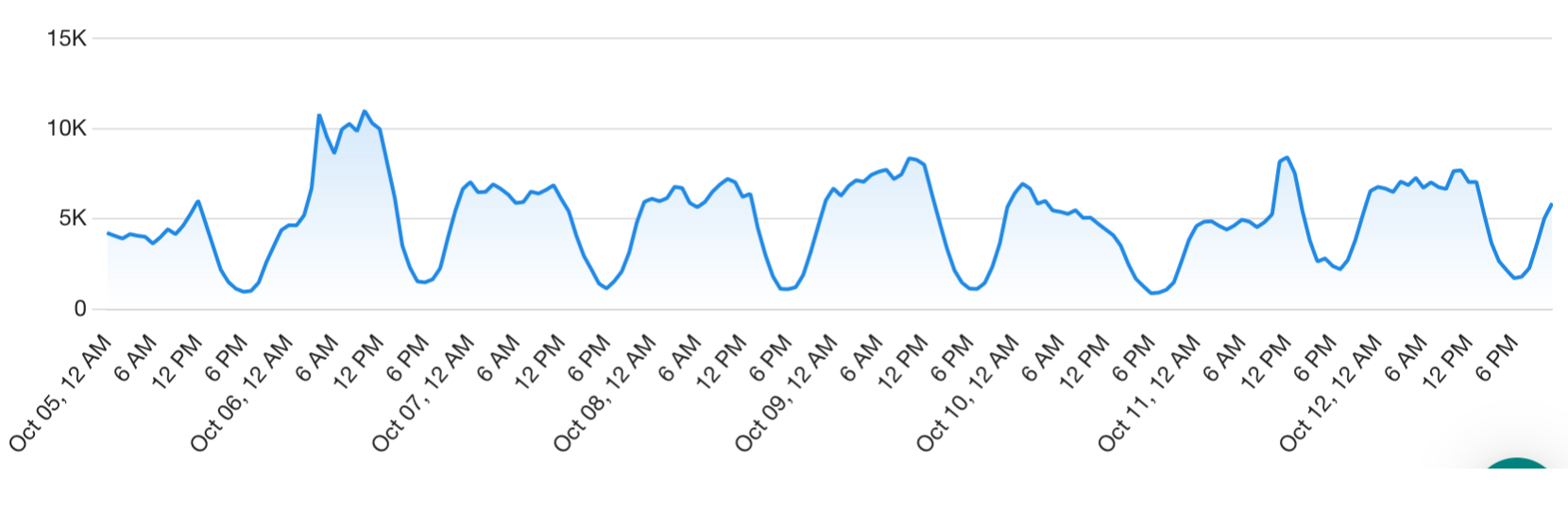
Researchers at Clemson University who track political bot networks also couldn’t find a real decline. And the research firm Graphika found no clear drop in the topics people said had gone quiet. I also ran my own analyses of broad social media trends on Meta and X platforms. I looked at the number of posts for a variety of polarizing keywords (as well as posts about “AfD”) and saw no meaningful decline after the drone strikes.
One of the most viral pieces of “evidence” was a graphic claiming online activity around the AfD had dropped by 56 percent. It was shared by Jarosław Wolski, a Polish political scientist, and reached millions of views. He later deleted it and posted a public apology, saying researchers found no lasting drop in pro-AfD posts and that the original graphic turned out to be AI-generated. He also said that going forward he’ll cite original sources, or clearly say when he doesn’t have one. Credit to him for owning the mistake!
So there’s no real evidence that the strikes silenced Russian propaganda accounts and you can read the Snopes fact-check here.
But we can’t be fully sure
That said, we don’t have great data on replies and individual accounts. Platforms have cut back researcher access over the past few years, and the tools that used to make this kind of analysis possible are mostly gone. That makes it hard to prove a claim like this, but it also makes it hard to fully rule it out. Many people advocate for more data transparency, accessibility, and accountability from these big tech companies, but it is certainly a difficult battle.
Despite having clear data, some things probably did change. Graphika noticed less activity in some Russian Telegram channels, possibly from internet outages inside Russia. That’s different from the trolls in your replies disappearing, but again, we can’t really measure this with a sufficient level of detail. It’s possible that some people really did see fewer bots or trolls in their replies, but showing that it was directly connected to the Yandex strikes would take a much more detailed analysis than I’ve seen so far.
The honest answer is that there’s no evidence for the broader story, and we don’t have the data to check it as closely as we’d like.
So why did so many people see a kinder internet?
Mike Sowden wrote a thoughtful thread on this that I’d recommend. He starts from the assumption that people weren’t dumb and were sincerely describing what they saw. His explanation is that the algorithm did the rest. People posted happy messages about how much nicer things felt. The algorithm saw what they were engaging with and showed them more of it. Their feeds really did get nicer for a while, just not because the bots were gone. Furthermore, while all this was happening, Threads updated its algorithm to better match what users want to see, so that was another confounding variable at least on one platform.
Sowden also points to the Thomas theorem, a sociology idea from 1928: if people define a situation as real, it becomes real in its consequences. People believed their feeds were kinder, acted that way, and helped make it true.
Why would people believe that?
It fit what they already believed. Many people already feel social media is full of fake accounts (and there is evidence to support it). This story confirmed it.
It had a satisfying ending. A dramatic strike, a clear villain, and a happier internet as the payoff.
It came with “evidence.” A real chart made the story feel proven, even though it measured something different.
Trusted voices shared it. When big accounts and even a world leader repeat something, it feels more settled. This is especially true when you already like those accounts or they share identities with you.
Their feeds seemed to confirm it. The algorithm fed them more of what they were already looking for, so it very much could have been a real change in what they saw.
There wasn’t good data to push back. Without detailed data on accounts and replies, plausible guesses can start to feel like facts, especially given all of the above.
What to watch for next time
The evergreen advice is to think about how our own beliefs shape what we’re willing to accept. When a chart goes viral, ask what it’s actually measuring. And when your feed seems to prove something, remember that your feed is partly shaped by what you engage with.